-
 [email protected]
-
 +66-31240888



 English
 Español
 ไทย
ไทยAre Takeaway Food Containers Ready for Saucy Meals
Takeaway meals are becoming increasingly diverse, and many popular dishes come with sauces, gravies, oils, or other liquids. Curry, pasta, stir-fried noodles, rice bowls, and sauced vegetables can place very different demands on disposable packaging compared with dry foods.
This makes Disposable Take Away Food Containers more than a simple holder for prepared meals. The container needs to control moisture, resist grease, retain its shape, and keep the lid secure during handling and delivery.
Why Are Saucy Foods More Demanding?
Sauce creates several packaging challenges at the same time. Liquid can collect at the bottom, oil can penetrate weak areas, and hot food can increase the stress on the fiber structure. Movement during transportation adds another variable.
- Moisture exposure: Watery sauces can gradually soften untreated fiber.
- Grease contact: Hot oil can test the surface barrier and fiber density.
- Heat: High-temperature meals can affect rigidity and lid performance.
- Movement: Tilting, stacking, and vibration can push sauce toward seams and corners.
Recent product testing and packaging guidance indicate that grease resistance and leakage resistance are separate performance characteristics. A container may show some surface staining without allowing liquid to pass completely through the material.
Which Container Features Help Control Sauce?
Base Depth and Side Walls
A deeper container can provide more space for liquid-based meals while reducing the chance of sauce reaching the upper edge. Raised side walls can also provide additional structural support during transport.
Lid Fit Matters
A strong container base cannot compensate for a poorly fitted lid. Snap-fit, friction-fit, or hinged closure designs can help keep food contained during normal movement. The lid should match the rim closely without creating excessive pressure that could distort the container.
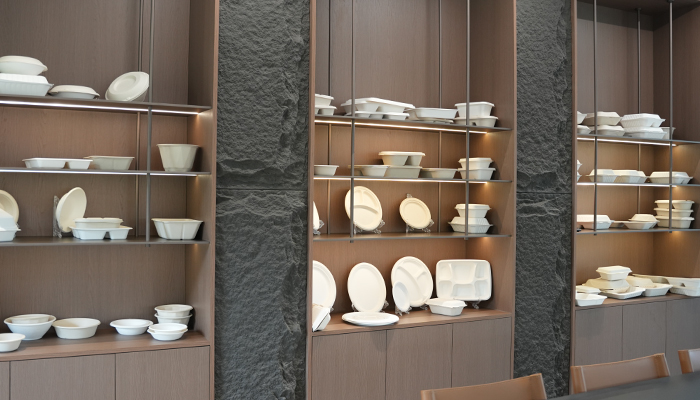
Commercial bagasse takeaway boxes are available with secure-fit lids designed for delivery, while deeper formats are commonly recommended for meals containing larger amounts of liquid.
How Do Different Sauces Challenge Disposable Containers?
| Food Type | Main Packaging Challenge | Useful Design Consideration |
| Dry pasta | Moderate moisture and oil | Standard rigid container |
| Curry | Liquid, oil, and heat | Deep base and moisture resistance |
| Stir-fried noodles | Oil and steam | Grease-resistant surface |
| Thin soup | High liquid volume | Deep container with secure lid |
| Gravy-based rice | Moisture plus food weight | Rigid base and sealed corners |
Not every takeaway container should therefore be treated as a universal solution. A shallow clamshell designed for burgers or fries may have a different liquid-handling capability from a deep round container designed for curry or soup.
Can Bagasse Containers Handle Hot Sauces?
Bagasse fiber provides a naturally rigid molded structure, but its performance varies according to fiber density, molding pressure, wall uniformity, surface treatment, and contact duration.
Some commercial bagasse containers are specified for hot and cold foods and are marketed for curries, pasta, soups, and other saucy meals. Available formats can range from around 500 ml to 1,000 ml, giving foodservice operators different capacities for different portions.
Temperature ratings also vary by product. Some manufacturers specify resistance around 95°C, while individual products may have higher or lower limits. Buyers should therefore review the exact specification rather than assume that every bagasse container has the same heat tolerance.
What About Sauce During Delivery?
Leak resistance needs to be considered together with transportation conditions. A container sitting level on a restaurant counter experiences less stress than the same container inside a delivery bag moving through traffic.
- Keep liquid food below the recommended fill level.
- Use a lid designed for the specific container rim.
- Match shallow formats with foods containing limited free liquid.
- Use deeper containers for soups, gravies, and watery sauces.
- Test the filled package under realistic delivery movement.
Practical testing is particularly useful because sauce viscosity, temperature, portion size, and delivery duration can vary considerably between food businesses. A package that performs well with thick curry may behave differently with a thin broth.
Are Disposable Take Away Food Containers Ready for Saucy Meals?
The answer depends on the specific container design and the food application. Disposable Take Away Food Containers with dense molded fiber, suitable depth, moisture and grease resistance, and a secure lid can handle many saucy takeaway meals. However, “leak-resistant” should not automatically be interpreted as suitable for every liquid food or extended storage period.
For foodservice buyers, the practical approach is to match container depth, capacity, lid design, and barrier performance with the actual menu. Testing the finished package with hot sauce, oil, and the intended delivery duration can provide a much clearer indication of performance than judging the material by name alone.
Productos relacionados







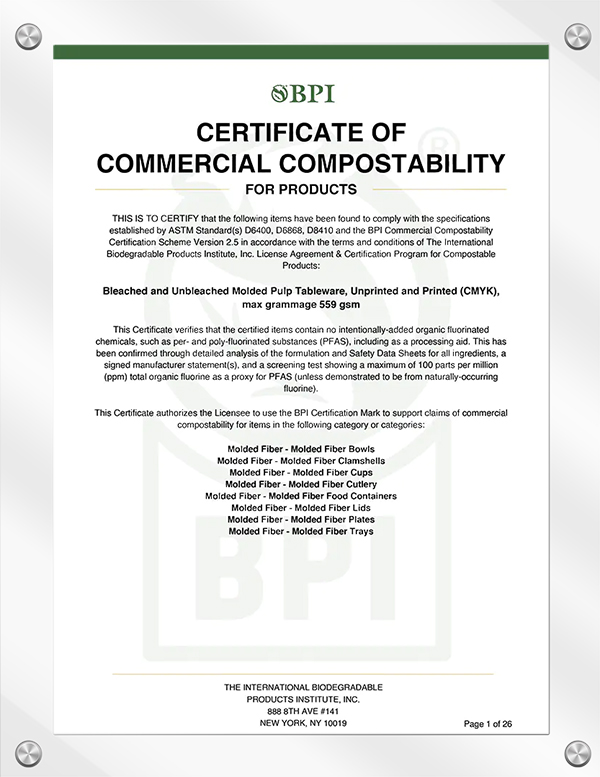
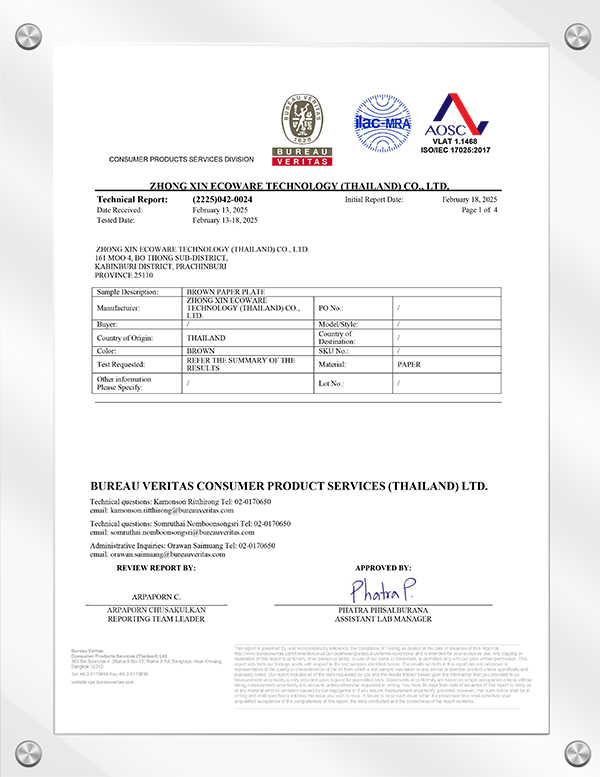
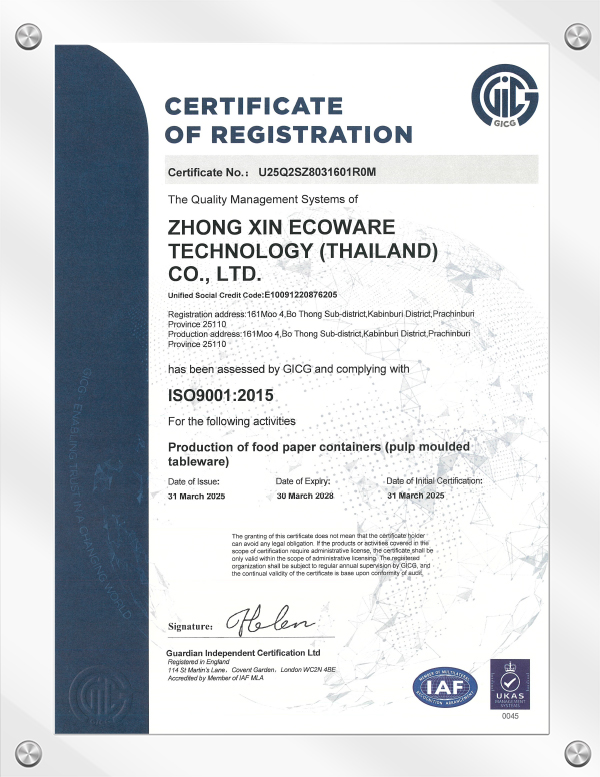
Zhong Xin Ecoware (Tailandia) se registró el 1 de noviembre de 2023, y comenzó oficialmente la construcción del edificio de fábrica en junio de 2024. En la actualidad, el taller de primera fase de la fábrica se ha completado y utilizado por completo. La segunda fase de la fábrica se está construyendo intensamente.
El aterrizaje y el desarrollo de la zhongxina en Tailandia ha traído una gran cantidad de inversión inicial para tierras, fábricas, etc., e inversión operativa continua para actualizaciones de equipos continuos, actualizaciones tecnológicas y expansión de capacidad.
Zhong Xin Ecoware (Tailandia) ha creado directa e indirectamente miles de oportunidades laborales, el aumento de los ingresos del gobierno, promovió el desarrollo económico local, las cadenas de suministro locales cultivadas, proporcionó capacitación sistemática para los empleados, mejoró la calidad del capital humano local, la vitalidad inyectada en la economía local, la competencia industrial mejorada y mejoraron los estandarias de los residentes de los residentes.
Zhong Xin Ecoware (Tailandia) colabora activamente con molinos de pulpa locales para explorar nuevos modelos de cooperación para desarrollar nuevos productos, mejorar la capacidad de producción y la calidad. Al mismo tiempo, basándose en la tecnología de producción avanzada de Zhongxin, el flujo de procesos, la experiencia de gestión y el sistema de control de calidad, promueve el desarrollo de esta industria en Tailandia.

-
-
 +66-31240888
 -
 161 Aldea n.º 4, Subdistrito Bo Thong, Distrito Kabin Buri, Provincia de Prachinburi 25110
-
¿Los contenedores para llevar se ajustarán a sus tapas existentes y al flujo de trabajo de entrega?
Oct 16,2026
-
¿Qué debe incluir un fabricante de bagazo en una cotización de pedido a granel?
Oct 09,2026
-
Beyond Plates: Which Foods Suit Bagasse Tableware
Oct 02,2026
-
Microwave Reheating: Is a Bagasse Lunch Box Suitable
Sep 25,2026
-
Can Sugarcane Plates Handle Hot, Greasy Foods
Sep 18,2026
-
Are Takeaway Food Containers Ready for Saucy Meals
Sep 11,2026
-
Will Bagasse Pulp Trays Sag Under Heavy Meals
Sep 04,2026
-
Envases de plástico o de pulpa: cuál se adapta mejor a la comida para llevar
Aug 28,2026
-
Tazones de bagazo: lo suficientemente fuertes para sopas y salsas
Aug 21,2026
-
Top 10 fabricantes de vajilla de bagazo en Tailandia (Ranking 2026)
Aug 18,2026
-
¿Qué hace que los recipientes de alimentos sean más seguros para el uso diario?
Aug 14,2026
-
¿Están listas las loncheras ecológicas para comidas calientes y comida para llevar?
Aug 07,2026
Copyright © 2025 Zhong Xin Ecoware Technology (Tailandia) S.A., Ltd.
Todos los derechos reservados.
