-
 [email protected]
-
 +66-31240888



 English
 Español
 ไทย
ไทยWill Bagasse Pulp Trays Sag Under Heavy Meals
Heavy takeaway meals can put more pressure on disposable food packaging than a light snack or dry food. Rice bowls, curries, grilled meat, pasta with sauce, and combination meals may create a combination of weight, heat, oil, and moisture. This raises a practical question for foodservice buyers: can a Biodegradable Bagasse Pulp Tray maintain its shape under a substantial food load?
The answer depends on more than the bagasse material itself. Fiber density, wall thickness, tray geometry, moisture exposure, food temperature, and load distribution all influence how well a molded pulp tray performs.
What Makes a Bagasse Tray Resistant to Sagging?
Fiber Density Creates Structural Support
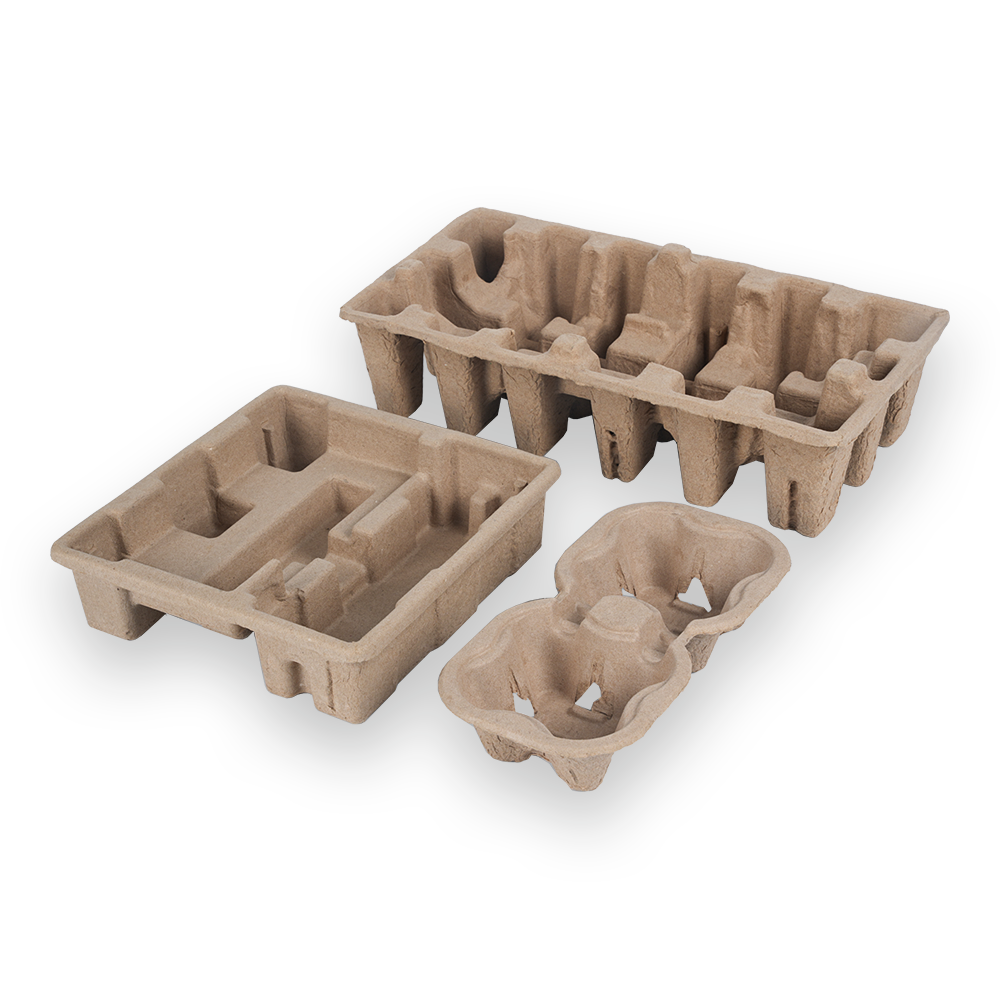
Bagasse trays are produced by forming compressed sugarcane fibers into a defined shape. Higher forming density can create a firmer structure, while uneven density may produce weak areas around the base, corners, or side walls.
- Fiber density: Dense molded fiber generally provides stronger resistance against bending and compression.
- Wall thickness: A thicker wall can improve rigidity, particularly around large tray surfaces.
- Rim design: Raised or reinforced edges can help prevent the tray from flexing during carrying.
- Base structure: Ribs, grooves, and molded contours can distribute food weight across a wider area.
These design details explain why two trays made from the same sugarcane pulp can behave differently under the same meal load.
Does Food Weight Affect Tray Performance?
Food weight is only part of the equation. A 500 g dry meal does not necessarily create the same structural challenge as a 500 g serving of hot curry. Moisture and heat can gradually reduce fiber stiffness, especially during extended holding periods.
| Food Condition | Typical Structural Concern | Useful Tray Feature |
| Dry rice or bakery foods | Moderate static load | Standard rigid base |
| Hot rice with meat | Higher combined weight and heat | Reinforced base and rim |
| Curry or stew | Weight plus moisture exposure | Dense fiber structure and moisture resistance |
| Fried or oily meals | Heat, oil, and extended contact | Grease-resistant surface |
Some commercial bagasse trays are rated for hot food around 95°C, while certain heavy-duty designs specify resistance to hot water or oil around 100°C. Actual performance varies by formulation and construction, so buyers should check the product specification rather than applying a universal temperature rating.
How Does Moisture Change Load-Bearing Ability?
Moisture deserves special attention because molded sugarcane fiber naturally interacts with water. Prolonged exposure to steam, sauces, or liquid food can soften the fiber structure and reduce rigidity.
- Short serving periods generally place less stress on the tray.
- Long delivery periods can increase moisture exposure.
- Hot steam may affect the tray even without visible liquid underneath.
- Oily sauces can add another stress factor alongside heat and moisture.
Recent molded-fiber testing guidance also highlights humidity as a factor that can reduce compressive performance. This makes real-use testing more meaningful than relying only on dry-condition strength figures.
Which Design Details Matter for Heavy Meals?
Shape Can Be as Important as Material
A flat tray with a broad unsupported surface may flex more easily than a tray with molded ribs or deeper side walls. Compartment trays can also distribute food across several sections, reducing concentrated pressure on a single area.
- Deep side walls can improve edge rigidity.
- Raised rims provide additional support during carrying.
- Molded channels can increase stiffness across larger surfaces.
- Multiple compartments help separate food and distribute its weight.
Commercial examples show that bagasse trays are available with different capacities, dimensions, weights, and compartment layouts. A 35 g four-compartment tray, for example, can use a 278 × 213 mm format, demonstrating how product geometry and material quantity are combined to support meal applications.
What Should Buyers Check Before Ordering?
A Biodegradable Bagasse Pulp Tray intended for heavy meals should be evaluated against its actual application rather than judged only by appearance.
- Rated food temperature
- Recommended food weight or load capacity
- Tray weight and wall thickness
- Water and grease resistance
- Base and rim structure
- Expected holding or delivery duration
- Performance under humid conditions
Heavy Meals Require More Than a Strong Material
A bagasse tray does not automatically sag simply because it carries a heavy meal. Proper fiber density, suitable wall thickness, reinforced geometry, and resistance to heat and moisture can make a significant difference. The key is matching the Biodegradable Bagasse Pulp Tray design with the food weight, temperature, moisture level, and service duration expected during actual use.
For takeaway operators and food packaging buyers, a simple load test with the intended meal can reveal practical performance: fill the tray to the target weight, keep the food at its normal serving temperature, and observe base deflection, rim stability, and handling comfort during a simulated delivery period.
Productos relacionados







Zhong Xin Ecoware (Tailandia) se registró el 1 de noviembre de 2023, y comenzó oficialmente la construcción del edificio de fábrica en junio de 2024. En la actualidad, el taller de primera fase de la fábrica se ha completado y utilizado por completo. La segunda fase de la fábrica se está construyendo intensamente.
El aterrizaje y el desarrollo de la zhongxina en Tailandia ha traído una gran cantidad de inversión inicial para tierras, fábricas, etc., e inversión operativa continua para actualizaciones de equipos continuos, actualizaciones tecnológicas y expansión de capacidad.
Zhong Xin Ecoware (Tailandia) ha creado directa e indirectamente miles de oportunidades laborales, el aumento de los ingresos del gobierno, promovió el desarrollo económico local, las cadenas de suministro locales cultivadas, proporcionó capacitación sistemática para los empleados, mejoró la calidad del capital humano local, la vitalidad inyectada en la economía local, la competencia industrial mejorada y mejoraron los estandarias de los residentes de los residentes.
Zhong Xin Ecoware (Tailandia) colabora activamente con molinos de pulpa locales para explorar nuevos modelos de cooperación para desarrollar nuevos productos, mejorar la capacidad de producción y la calidad. Al mismo tiempo, basándose en la tecnología de producción avanzada de Zhongxin, el flujo de procesos, la experiencia de gestión y el sistema de control de calidad, promueve el desarrollo de esta industria en Tailandia.

-
-
 +66-31240888
 -
 161 Aldea n.º 4, Subdistrito Bo Thong, Distrito Kabin Buri, Provincia de Prachinburi 25110
-
¿Los contenedores para llevar se ajustarán a sus tapas existentes y al flujo de trabajo de entrega?
Oct 16,2026
-
¿Qué debe incluir un fabricante de bagazo en una cotización de pedido a granel?
Oct 09,2026
-
Beyond Plates: Which Foods Suit Bagasse Tableware
Oct 02,2026
-
Microwave Reheating: Is a Bagasse Lunch Box Suitable
Sep 25,2026
-
Can Sugarcane Plates Handle Hot, Greasy Foods
Sep 18,2026
-
Are Takeaway Food Containers Ready for Saucy Meals
Sep 11,2026
-
Will Bagasse Pulp Trays Sag Under Heavy Meals
Sep 04,2026
-
Envases de plástico o de pulpa: cuál se adapta mejor a la comida para llevar
Aug 28,2026
-
Tazones de bagazo: lo suficientemente fuertes para sopas y salsas
Aug 21,2026
-
Top 10 fabricantes de vajilla de bagazo en Tailandia (Ranking 2026)
Aug 18,2026
-
¿Qué hace que los recipientes de alimentos sean más seguros para el uso diario?
Aug 14,2026
-
¿Están listas las loncheras ecológicas para comidas calientes y comida para llevar?
Aug 07,2026
Copyright © 2025 Zhong Xin Ecoware Technology (Tailandia) S.A., Ltd.
Todos los derechos reservados.
