-
 [email protected]
-
 +66-31240888



 English
 Español
 ไทย
ไทยCan Sugarcane Plates Handle Hot, Greasy Foods
Hot and greasy meals can quickly expose weaknesses in disposable tableware. Fried chicken, burgers, grilled meat, oily noodles, curry, and roasted foods can combine high temperature with cooking oil and sauces. This creates a practical question for foodservice operators: can Eco-Friendly Disposable Sugarcane Plates remain stable and usable under these conditions?
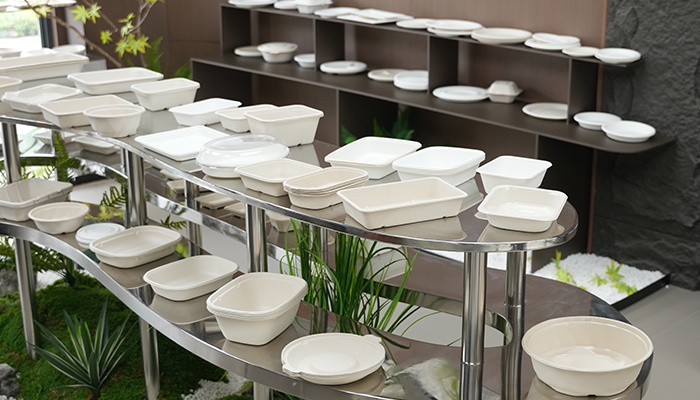
Sugarcane bagasse plates are molded from the fibrous residue left after sugarcane juice extraction. During production, the pulp is formed under heat and pressure, creating a relatively dense structure. However, heat and grease resistance still depend on the specific product design, fiber density, thickness, and intended temperature range.
Heat Is Only Part of the Challenge
A hot meal does not automatically make a bagasse plate unsuitable. The bigger concern appears when high temperature is combined with oil, moisture, and extended contact time.
- Heat: Hot food can temporarily soften the fiber structure, particularly around thin edges.
- Grease: Hot oil can test the surface's resistance to penetration.
- Steam: Moisture released by freshly cooked food can accumulate beneath the meal.
- Contact time: A plate used for 10 minutes may experience different conditions from one holding food for an hour.
Recent product specifications show that commercially available bagasse plates can have heat ratings around 100°C, while other products specify hot and oily food applications up to 100–120°C. These figures are product-specific rather than universal characteristics of every sugarcane plate.
How Does Grease Affect Plate Performance?
Grease resistance is particularly important for foods containing fried oils or rich sauces. A porous fiber structure can absorb liquid, so manufacturing quality and surface characteristics influence how quickly oil moves into the material.
Research comparing molded pulp materials has demonstrated that grease resistance can vary substantially between formulations. A published study found that its engineered sugarcane/bamboo molded pulp showed stronger resistance to high-temperature oil than several comparison materials, illustrating the importance of fiber formulation and processing rather than relying on material names alone.
Foods That Put More Pressure on Grease Resistance
| Food Application | Heat Level | Grease Exposure | Useful Plate Characteristic |
| French fries | High | Medium–High | Oil-resistant surface |
| Fried chicken | High | High | Rigid, grease-resistant structure |
| Grilled meat | High | Medium–High | Firm base and raised rim |
| Curry | High | Medium–High | Moisture and oil resistance |
| Oily noodles | High | High | Dense fiber structure |
Does Plate Thickness Make a Difference?
Plate geometry can influence how the product behaves under a hot meal. A broad, shallow plate places more stress on its center, while a raised rim and molded contours can provide additional rigidity.
- Thicker walls can provide additional resistance against flexing.
- Raised edges can help maintain rigidity around the perimeter.
- Molded ribs or contours can improve stiffness across larger surfaces.
- Appropriate plate diameter helps match the structural design with the intended portion size.
Commercial examples illustrate the range of available specifications. A 9-inch bagasse plate can measure approximately 225 × 20 mm, weigh around 20 g, and provide roughly 500 ml of usable capacity, while a 6-inch model may measure about 150 × 22 mm and weigh approximately 7 g.
What Temperature Can Sugarcane Plates Handle?
There is no single temperature limit that applies to every bagasse plate. Product specifications vary according to fiber composition, molding conditions, thickness, and any surface treatment.
| Example Specification | Reported Rating | Typical Application |
| Bagasse plate | Up to 100°C | Hot food and hot oil |
| Selected bagasse tableware | 100–120°C | Hot and oily foods |
| Selected commercial plate | Up to 220°C under specified conditions | Microwave/oven applications |
These numbers should not be treated as interchangeable. A microwave rating, oven rating, and food-contact temperature rating describe different use conditions. Some suppliers specifically state that microwave suitability must be confirmed for the individual model and heating conditions.
Hot Food Testing Should Use Real Meals
Testing an empty plate at room temperature provides limited information about its performance with greasy food. A more useful evaluation reproduces the actual serving conditions.
- Place the intended hot food directly on the plate.
- Include the normal amount of oil or sauce.
- Check the plate after 15, 30, and 60 minutes.
- Inspect the underside for oil penetration or moisture.
- Lift the plate from the edge to evaluate flexing.
- Repeat the test with the actual portion weight used in service.
This approach is especially useful for restaurants, caterers, meal-delivery companies, and distributors because the same plate may face very different conditions across different menus.
Are Eco-Friendly Disposable Sugarcane Plates Suitable for Greasy Meals?
Suitable bagasse plates can handle many hot and greasy foods, but performance depends on the actual specification rather than the phrase “sugarcane plate” alone. Dense molded fiber, appropriate thickness, grease resistance, and a suitable temperature rating can help the plate maintain its form during foodservice.
Eco-Friendly Disposable Sugarcane Plates therefore make sense for menus such as fried foods, grilled dishes, oily noodles, curry, and hot entrées, provided the product has been designed and tested for those conditions.
For buyers, the useful questions go beyond whether a plate is made from bagasse. Checking the rated temperature, grease resistance, dimensions, weight, thickness, capacity, and recommended food applications provides a clearer basis for judging whether the plate matches a particular menu.
Productos relacionados







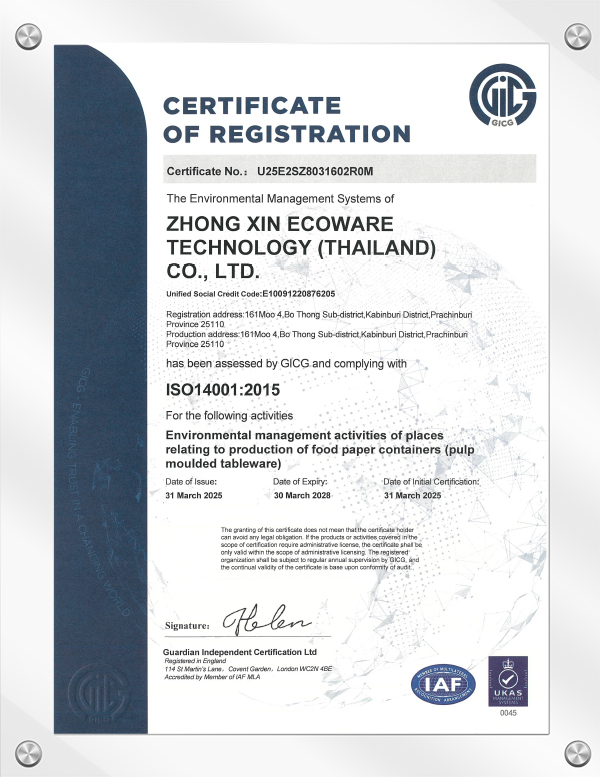
Zhong Xin Ecoware (Tailandia) se registró el 1 de noviembre de 2023, y comenzó oficialmente la construcción del edificio de fábrica en junio de 2024. En la actualidad, el taller de primera fase de la fábrica se ha completado y utilizado por completo. La segunda fase de la fábrica se está construyendo intensamente.
El aterrizaje y el desarrollo de la zhongxina en Tailandia ha traído una gran cantidad de inversión inicial para tierras, fábricas, etc., e inversión operativa continua para actualizaciones de equipos continuos, actualizaciones tecnológicas y expansión de capacidad.
Zhong Xin Ecoware (Tailandia) ha creado directa e indirectamente miles de oportunidades laborales, el aumento de los ingresos del gobierno, promovió el desarrollo económico local, las cadenas de suministro locales cultivadas, proporcionó capacitación sistemática para los empleados, mejoró la calidad del capital humano local, la vitalidad inyectada en la economía local, la competencia industrial mejorada y mejoraron los estandarias de los residentes de los residentes.
Zhong Xin Ecoware (Tailandia) colabora activamente con molinos de pulpa locales para explorar nuevos modelos de cooperación para desarrollar nuevos productos, mejorar la capacidad de producción y la calidad. Al mismo tiempo, basándose en la tecnología de producción avanzada de Zhongxin, el flujo de procesos, la experiencia de gestión y el sistema de control de calidad, promueve el desarrollo de esta industria en Tailandia.
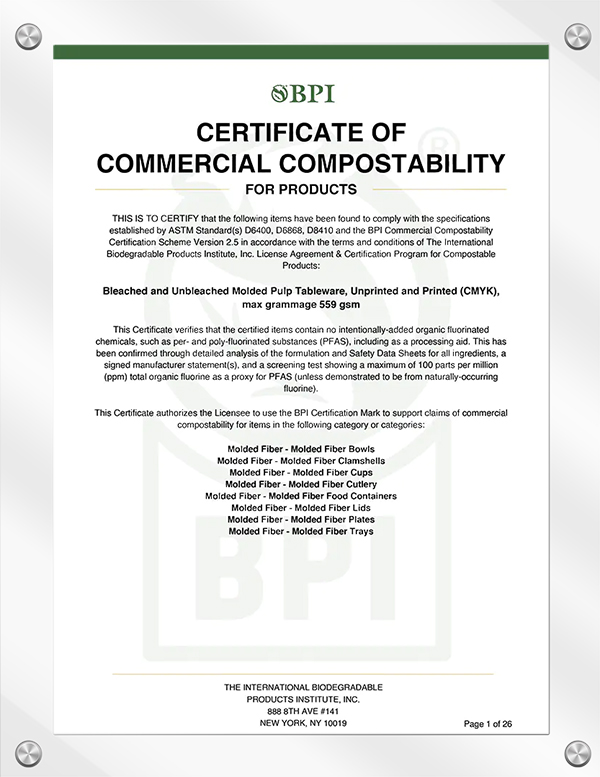
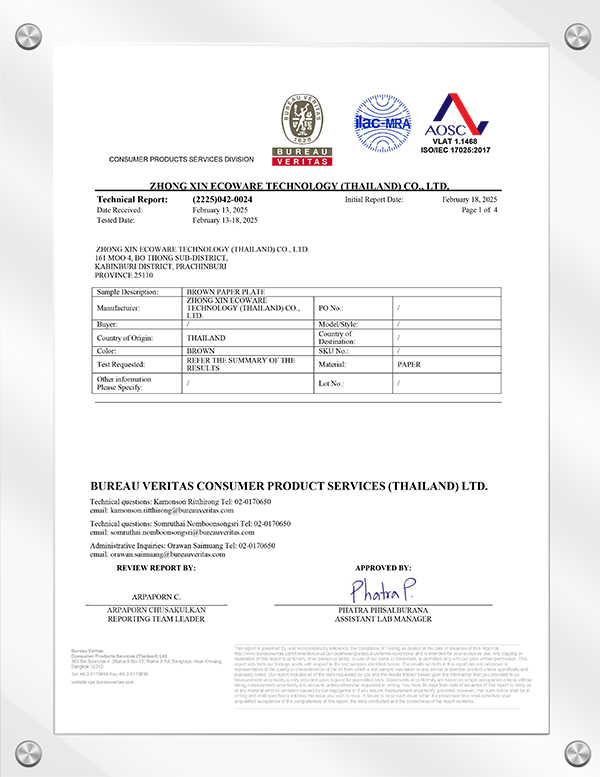
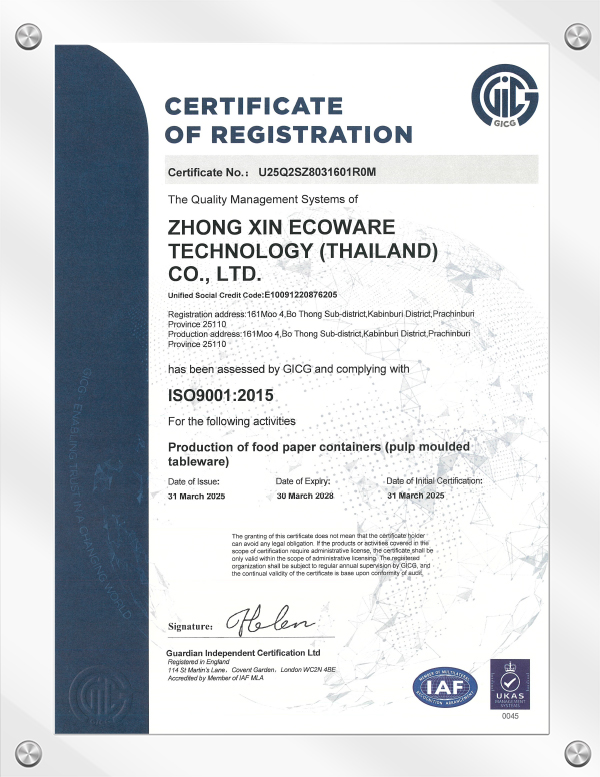

-
-
 +66-31240888
 -
 161 Aldea n.º 4, Subdistrito Bo Thong, Distrito Kabin Buri, Provincia de Prachinburi 25110
-
Can Sugarcane Plates Handle Hot, Greasy Foods
Sep 18,2026
-
Are Takeaway Food Containers Ready for Saucy Meals
Sep 11,2026
-
Will Bagasse Pulp Trays Sag Under Heavy Meals
Sep 04,2026
-
Envases de plástico o de pulpa: cuál se adapta mejor a la comida para llevar
Aug 28,2026
-
Tazones de bagazo: lo suficientemente fuertes para sopas y salsas
Aug 21,2026
-
Top 10 fabricantes de vajilla de bagazo en Tailandia (Ranking 2026)
Aug 18,2026
-
¿Qué hace que los recipientes de alimentos sean más seguros para el uso diario?
Aug 14,2026
-
¿Están listas las loncheras ecológicas para comidas calientes y comida para llevar?
Aug 07,2026
-
¿Las cajas de pulpa de papel desechables biodegradables para llevar permanecen verdaderamente compostables después de la exposición a la grasa?
Jul 31,2026
-
¿Qué condiciones causan que las cajas de contenedores de pulpa de alimentos colapsen durante el uso de entrega?
Jul 24,2026
-
¿Qué tan confiables son las bandejas de empaque de pulpa biodegradable bajo estrés de humedad y congelador?
Jul 17,2026
-
¿Son los recipientes de alimentos biodegradables y ecológicos realmente seguros para las comidas calientes y aceitosas?
Jul 10,2026
Copyright © 2025 Zhong Xin Ecoware Technology (Tailandia) S.A., Ltd.
Todos los derechos reservados.
