-
 [email protected]
-
 +66-31240888



 English
 Español
 ไทย
ไทยBeyond Plates: Which Foods Suit Bagasse Tableware
Bagasse tableware is no longer limited to serving a simple side dish. Sugarcane fiber can be molded into plates, bowls, trays, clamshell boxes, and compartment containers, giving foodservice operators several formats for different menus. Yet the right product depends heavily on the food being served.
A salad, a bowl of curry, a serving of fried chicken, and a portion of soup create very different demands. Compostable Biodegradable Bagasse Tableware can accommodate many of these applications, but product shape, capacity, moisture resistance, grease resistance, and temperature specifications should match the menu.
Which Foods Work Well With Bagasse Plates?
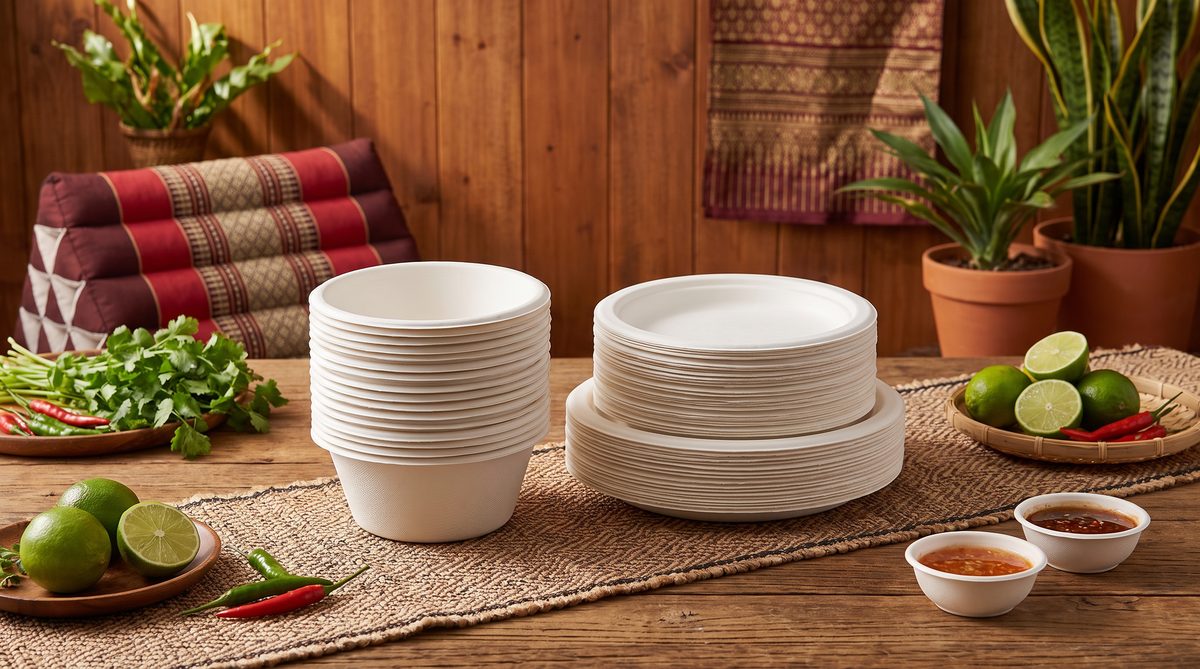
Flat bagasse plates are practical for foods that need open presentation and relatively easy access. They can suit both hot and cold meals, provided the plate specification matches the food conditions.
- Grilled meat: A firm plate with a raised rim can help contain cooking juices and side dishes.
- Fried foods: Fries, fried chicken, and appetizers benefit from a grease-resistant surface.
- Salads: Cold vegetables, fruit, and grain salads generally place less thermal stress on the fiber.
- Sandwiches: Burgers and sandwiches can be served on shallow plates or transferred to molded-fiber containers.
Commercial bagasse plates are available in several sizes. One product range, for example, lists plates from approximately 6 to 12 inches with temperature specifications ranging from -20°C to 120°C, although exact ratings vary by model.
Are Bowls Better for Wet Foods?
Foods containing free liquid need more vertical containment than dry foods. A shallow plate may work for a small amount of sauce, but soup, stew, porridge, and curry generally require a deeper bowl or container.
| Food Category | Recommended Format | Main Product Consideration |
| Salad | Plate or shallow bowl | Surface rigidity and moisture resistance |
| Curry | Deep bowl | Liquid and grease resistance |
| Soup | Deep bowl | Capacity, rim height, and heat resistance |
| Pasta with sauce | Bowl or deep tray | Moisture and oil resistance |
| Fried chicken | Plate or clamshell | Grease resistance and ventilation |
| Mixed meal | Compartment tray | Section separation and load distribution |
Commercial product ranges commonly offer bagasse bowls from around 8 oz to 32 oz, while larger formats can be used for soups, sauces, salads, and prepared meals. Such capacity differences matter because overfilling a container can change how much pressure is placed on the base and rim.
Where Do Compartment Trays Make More Sense?
Multi-component meals create a different packaging requirement. Rice, meat, vegetables, and sauces can be separated into individual sections instead of being placed together.
- Rice and protein meals: Separate compartments help keep sauces away from dry side dishes.
- Catering meals: Several food categories can be presented in a single tray.
- Meal preparation: Portion separation makes the contents easier to organize.
- Takeaway combinations: Different textures can remain separated during transportation.
The molded structure also matters. A compartment tray needs enough rigidity around the dividing walls so that the sections remain stable after food is added. Current bagasse packaging guidance specifically identifies compartment trays as a suitable format for multi-component foodservice applications.
Can Bagasse Tableware Handle Oily and Moist Foods?
Bagasse is frequently used for hot, wet, and oily food applications, but performance is not identical across every product. Fiber density, surface treatment, wall thickness, and manufacturing conditions can change resistance to oil and water.
Scientific research on molded sugarcane-based tableware has examined oil and water resistance as key requirements for food-contact applications. The study also demonstrated that fiber formulation and processing can substantially influence these properties.
Food Conditions Worth Checking
- Dry foods: Usually create relatively limited moisture exposure.
- Wet foods: Require suitable water resistance during the intended holding period.
- Oily foods: Require suitable grease resistance, particularly at elevated temperatures.
- Liquid foods: Need adequate depth and secure containment.
- Hot foods: Should remain within the manufacturer's stated temperature range.
Does Food Temperature Change the Choice?
Temperature should be evaluated alongside moisture, oil, and contact time. A container holding a dry sandwich at room temperature faces a different environment from a bowl filled with 90–95°C curry.
| Temperature Scenario | Example Food | Key Specification |
| Cold | Fruit or salad | Moisture resistance |
| Warm | Sandwich or bakery food | Basic rigidity |
| Hot | Rice and grilled meat | Heat and grease resistance |
| Very hot and wet | Soup or curry | Temperature, liquid, and structural performance |
Some commercial specifications cite ranges such as -20°C to 100°C or -20°C to 120°C, but these figures should be regarded as model-specific rather than a universal rating for all bagasse products. Testing guidance also recommends defining temperature, food type, contact duration, mechanical load, and deformation criteria together.
Which Bagasse Format Fits Different Menus?
The product format can be matched to the food characteristics rather than treating bagasse tableware as a single category.
- Plates: Suitable for grilled foods, fried items, sandwiches, desserts, and many cold dishes.
- Bowls: Better suited to soups, curries, porridge, salads, and saucy meals.
- Clamshells: Useful for burgers, fried meals, sandwiches, and takeaway combinations.
- Compartment trays: Practical for rice meals, catering portions, and menus containing several side dishes.
This approach can also simplify purchasing. Rather than ordering a single format for an entire menu, foodservice businesses can assign specific sizes and shapes to different dishes according to portion volume, moisture, temperature, and presentation requirements.
What Should Buyers Check Before Using Bagasse Tableware?
A product description can provide useful information, but actual menu conditions deserve equal attention. A simple application checklist can help buyers match the tableware with the food.
- Food temperature at serving
- Portion weight and volume
- Amount of free liquid
- Oil and grease exposure
- Expected holding time
- Container depth and capacity
- Microwave or freezer requirements
Testing with the actual menu is especially useful for products exposed to hot soup, curry, oily noodles, or extended delivery periods. A recent quality-control approach recommends testing molded-fiber products with defined fill temperatures, contact periods, leakage checks, rim strength, underside dampness, and deformation observations.
Matching the Food to the Tableware
Compostable Biodegradable Bagasse Tableware can serve a broad range of foods, from chilled salads and desserts to hot entrées, fried dishes, curry, and prepared meals. The key is not simply whether the product is made from bagasse, but whether its shape and specifications fit the food.
Plates work well for open presentation, bowls provide additional containment for liquid dishes, clamshells support takeaway meals, and compartment trays organize multi-part portions. Matching these formats with food temperature, moisture, grease level, capacity, and holding time can help create a more reliable foodservice package.
As bagasse tableware continues to expand beyond conventional plates, understanding the relationship between food characteristics and product design gives buyers a more practical way to evaluate disposable tableware for restaurants, catering, takeaway, and prepared-meal applications.
Productos relacionados







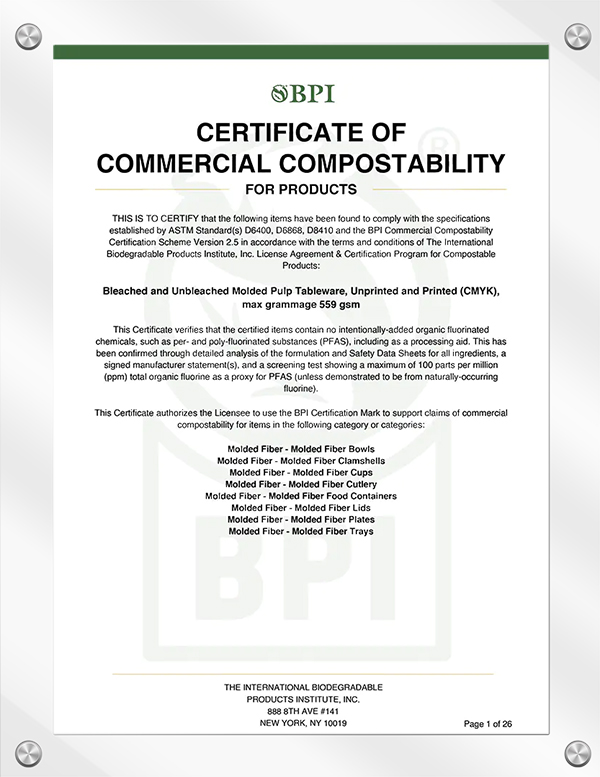
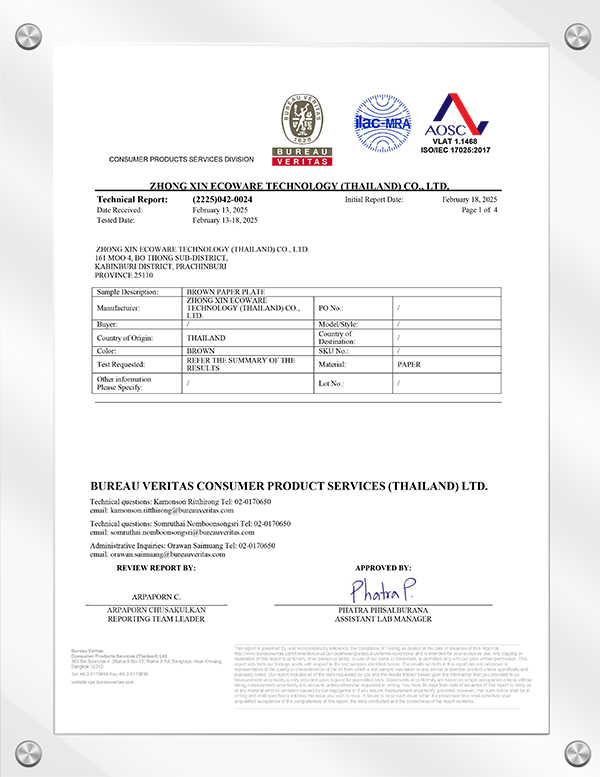
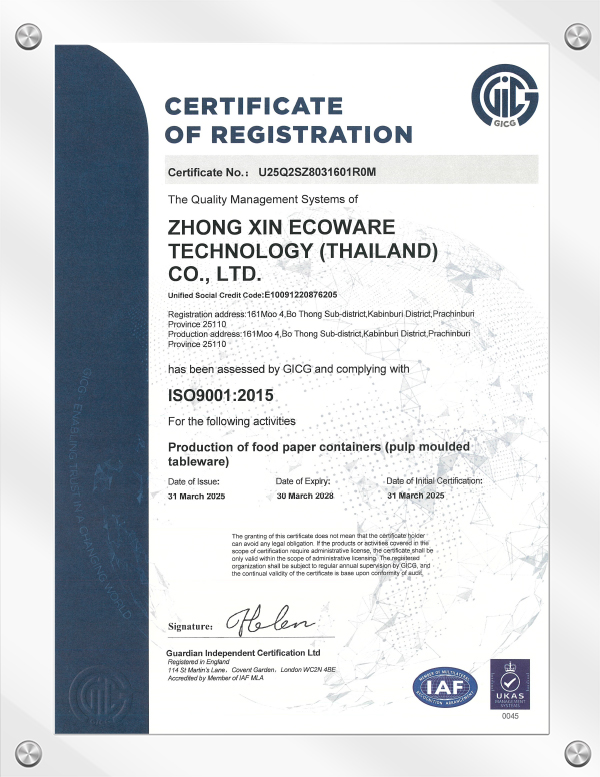
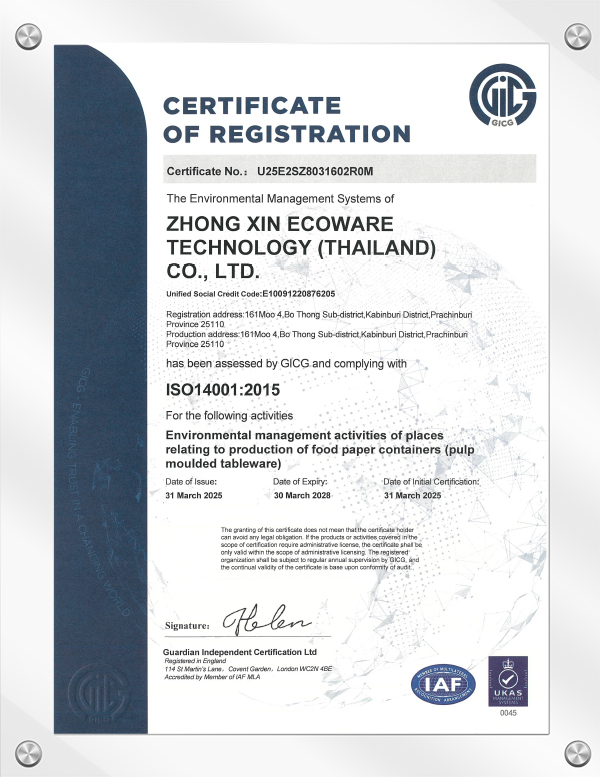
Zhong Xin Ecoware (Tailandia) se registró el 1 de noviembre de 2023, y comenzó oficialmente la construcción del edificio de fábrica en junio de 2024. En la actualidad, el taller de primera fase de la fábrica se ha completado y utilizado por completo. La segunda fase de la fábrica se está construyendo intensamente.
El aterrizaje y el desarrollo de la zhongxina en Tailandia ha traído una gran cantidad de inversión inicial para tierras, fábricas, etc., e inversión operativa continua para actualizaciones de equipos continuos, actualizaciones tecnológicas y expansión de capacidad.
Zhong Xin Ecoware (Tailandia) ha creado directa e indirectamente miles de oportunidades laborales, el aumento de los ingresos del gobierno, promovió el desarrollo económico local, las cadenas de suministro locales cultivadas, proporcionó capacitación sistemática para los empleados, mejoró la calidad del capital humano local, la vitalidad inyectada en la economía local, la competencia industrial mejorada y mejoraron los estandarias de los residentes de los residentes.
Zhong Xin Ecoware (Tailandia) colabora activamente con molinos de pulpa locales para explorar nuevos modelos de cooperación para desarrollar nuevos productos, mejorar la capacidad de producción y la calidad. Al mismo tiempo, basándose en la tecnología de producción avanzada de Zhongxin, el flujo de procesos, la experiencia de gestión y el sistema de control de calidad, promueve el desarrollo de esta industria en Tailandia.

-
-
 +66-31240888
 -
 161 Aldea n.º 4, Subdistrito Bo Thong, Distrito Kabin Buri, Provincia de Prachinburi 25110
-
Microwave Reheating: Is a Bagasse Lunch Box Suitable
Sep 25,2026
-
Can Sugarcane Plates Handle Hot, Greasy Foods
Sep 18,2026
-
Are Takeaway Food Containers Ready for Saucy Meals
Sep 11,2026
-
Will Bagasse Pulp Trays Sag Under Heavy Meals
Sep 04,2026
-
Envases de plástico o de pulpa: cuál se adapta mejor a la comida para llevar
Aug 28,2026
-
Tazones de bagazo: lo suficientemente fuertes para sopas y salsas
Aug 21,2026
-
Top 10 fabricantes de vajilla de bagazo en Tailandia (Ranking 2026)
Aug 18,2026
-
¿Qué hace que los recipientes de alimentos sean más seguros para el uso diario?
Aug 14,2026
-
¿Están listas las loncheras ecológicas para comidas calientes y comida para llevar?
Aug 07,2026
-
¿Las cajas de pulpa de papel desechables biodegradables para llevar permanecen verdaderamente compostables después de la exposición a la grasa?
Jul 31,2026
-
¿Qué condiciones causan que las cajas de contenedores de pulpa de alimentos colapsen durante el uso de entrega?
Jul 24,2026
-
¿Qué tan confiables son las bandejas de empaque de pulpa biodegradable bajo estrés de humedad y congelador?
Jul 17,2026
Copyright © 2025 Zhong Xin Ecoware Technology (Tailandia) S.A., Ltd.
Todos los derechos reservados.
